I build things that help people learn in environments that never stop changing. AI pipelines, interactive simulations, learning systems — designed from first principles, not templates.
I'm a learning and performance strategist who does their best work when the problem doesn't have a name yet. I take ambiguous, complex challenges — a workforce that needs to change faster than traditional training allows, a performance gap nobody has properly diagnosed — and turn them into structured, scalable solutions.
My background is instructional design, built on a Master's in Instructional Technologies from SF State and an undergraduate foundation in Psychology — which turns out to be a useful combination when your job is figuring out why people do what they do and designing experiences that actually change behavior. My focus now is on what's next: AI-powered tools, automated pipelines, and learning systems that don't exist yet but should. I build them, own them, and can explain exactly how they work.
Based in the San Francisco Bay Area. Supervised at home by two three-legged cats with strong opinions about keyboard placement.
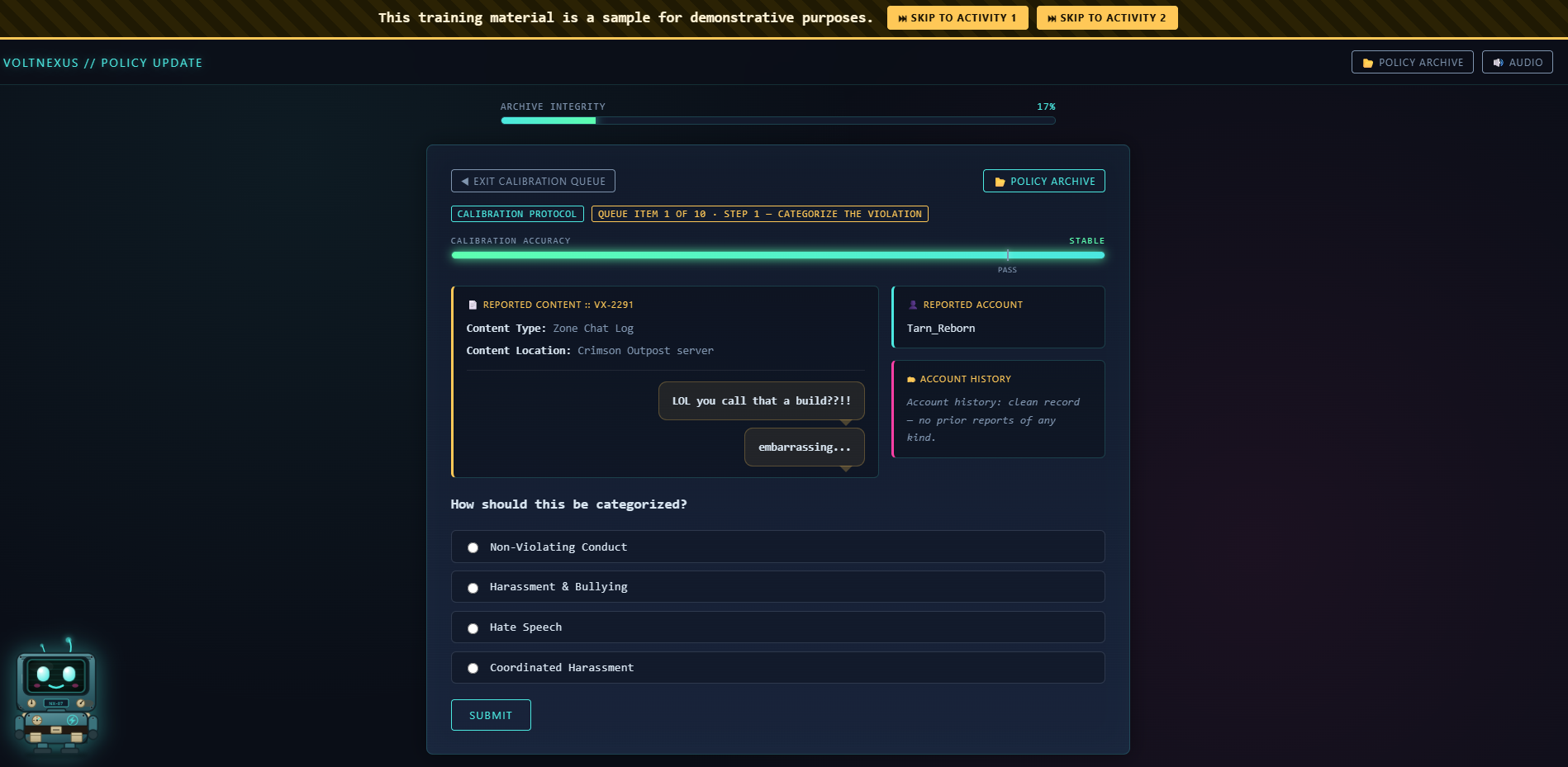
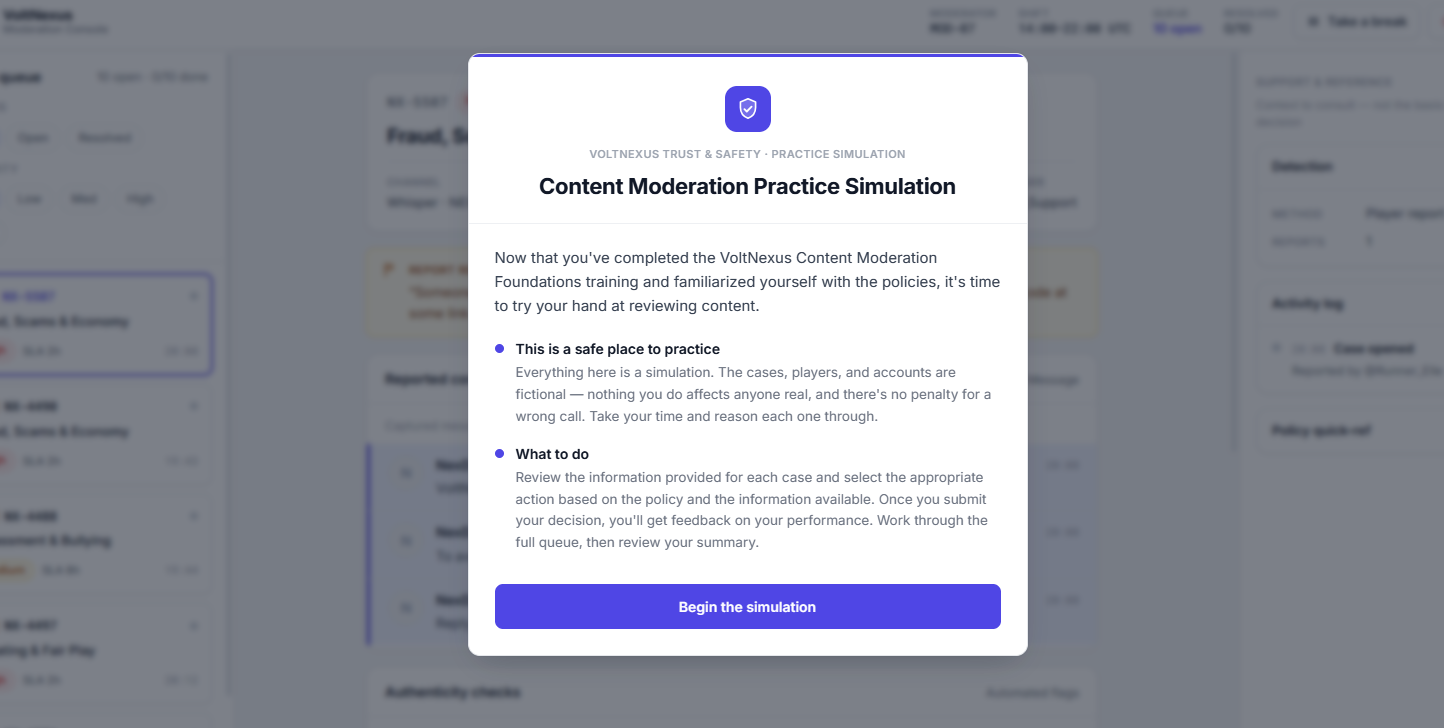
A gamified training module that drops content moderators into the world of VoltNexus, a fictional MMORPG, to re-familiarise themselves with a restructured policy through a scavenger hunt followed by realistic moderation scenarios.
A SCORM-packaged moderation sandbox where learners review fictitious high-fidelity cases and make enforcement decisions. Deterministic logic grades right/wrong; the Claude API evaluates free-text case notes against a rubric and generates adaptive coaching.
An automated pipeline that ingests source material — spreadsheets, documents, or web content — and uses the Claude API to generate assessment questions, distractors, and targeted feedback. Assessment creation as a repeatable, scalable system. Not a manual task.
A high-fidelity prototype of a fictitious T&S moderation console — wireframed in Figma, built with Claude Code. Designed to give the moderation sandbox the visual authenticity of a real product.
Before AI pipelines and interactive simulations, the core skill was the same: take something complicated and find the format that makes it land. These earlier pieces show that foundation.
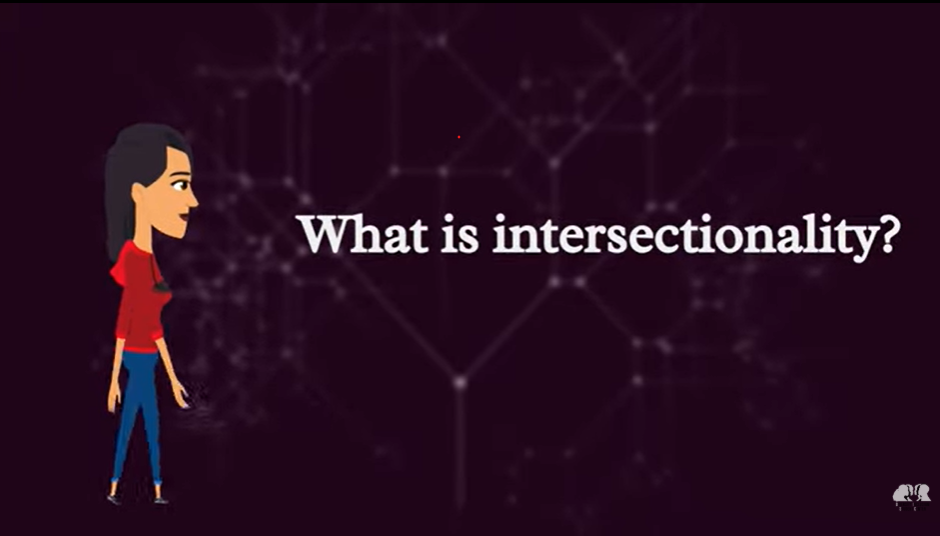
Intersectionality is one of those concepts that sounds academic until someone makes it concrete. This animated explainer breaks down how overlapping identities shape individual experience — designed for an audience encountering the concept for the first time. The challenge wasn't just simplifying a complex idea; it was doing so without flattening it. Built in Animaker.
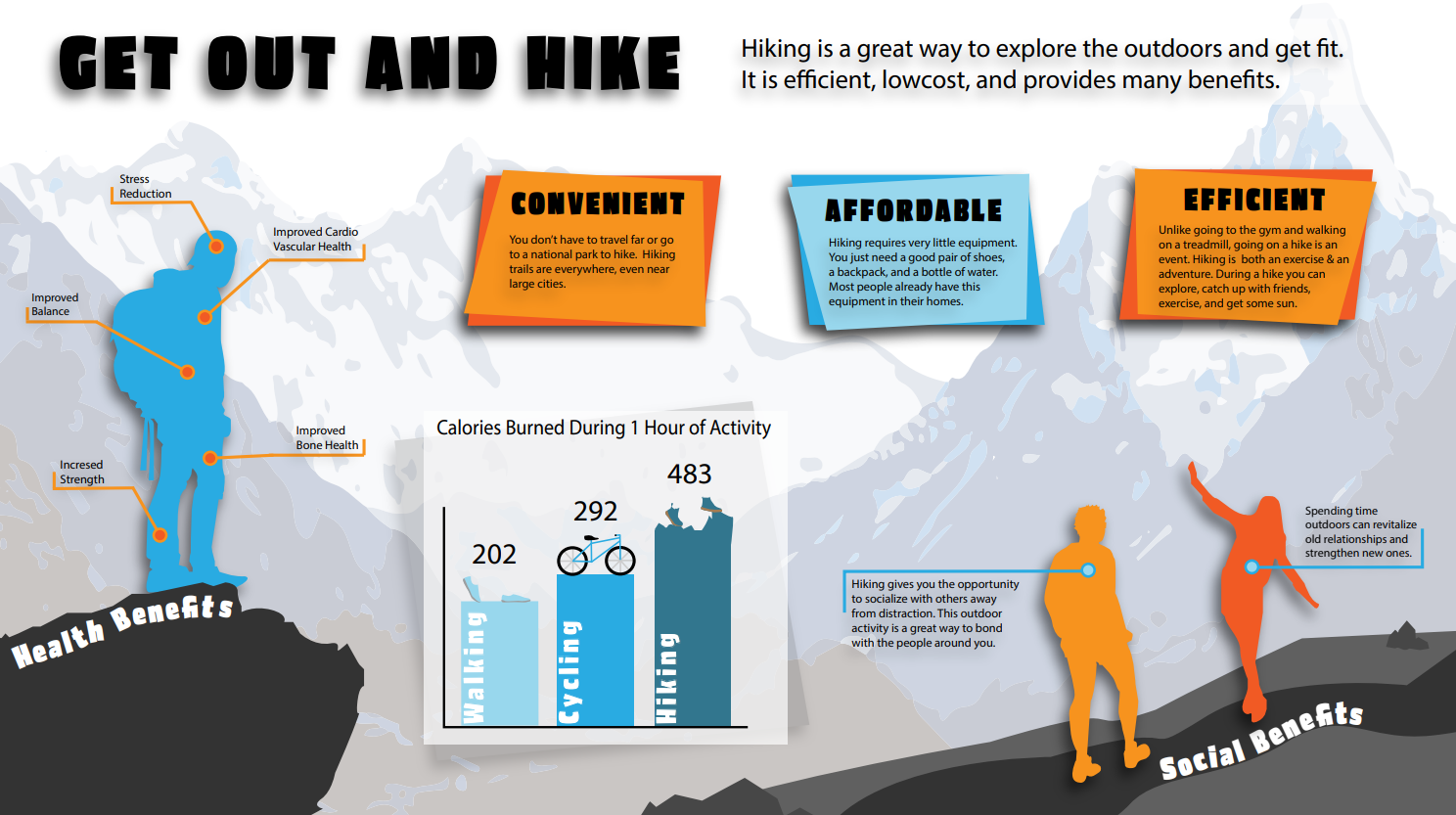
A health and wellness infographic communicating the physical, social, and practical benefits of hiking — including a calorie comparison across activities. Silhouette figures created using the pen tool in Adobe Illustrator. Designed to be scannable at a glance and detailed enough to reward a closer read.
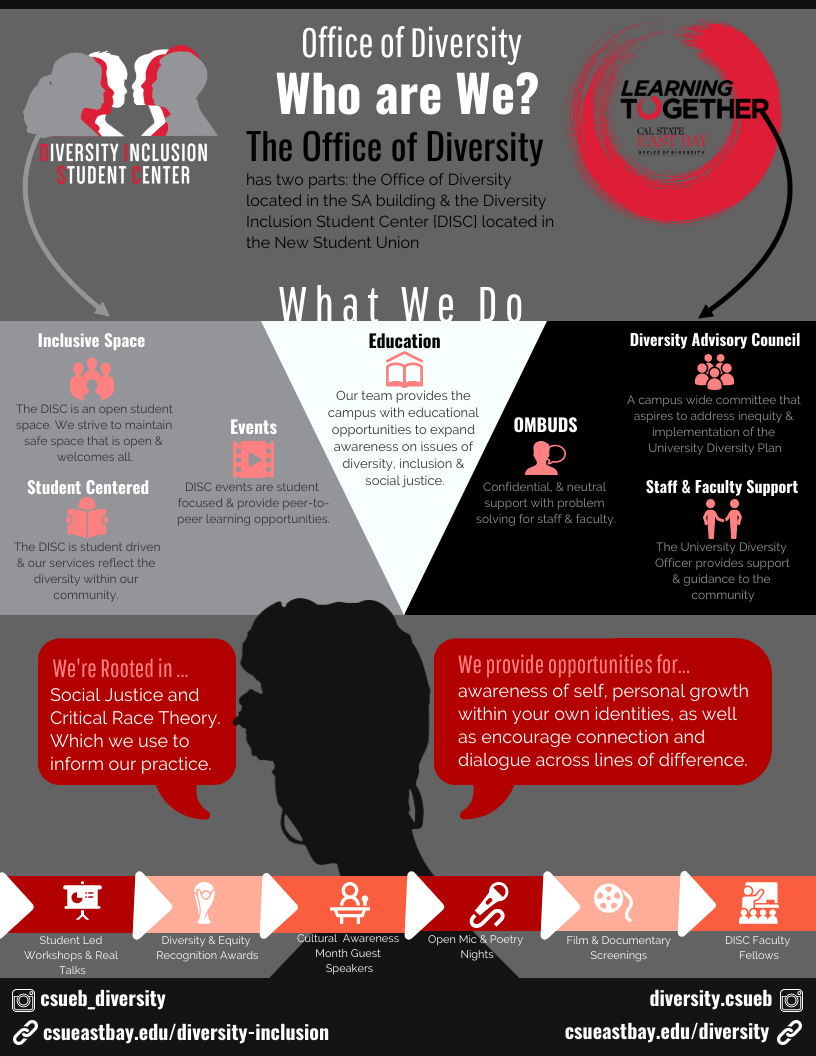
Two departments, one infographic. This piece maps the structure and services of CSU East Bay's Office of Diversity and the Diversity Inclusion Student Center — making the relationship between the two legible without turning it into an org chart. Central silhouette built with the pen tool in Adobe Illustrator.
Built AI-powered learning pipelines, SCORM packages, and interactive simulations at scale inside one of the fastest-moving organisations on the planet. Designed learning ecosystems for workforces in constant transformation.
Led programs spanning curriculum architecture, AI integration, and change enablement — always with a focus on closing the gap between what people know and what they actually need to do.
I'm open to senior L&D, AI Enablement, and Learning Architecture roles. If you're building something that involves humans learning difficult things in complicated environments, I'm probably interested.
Send a Message →